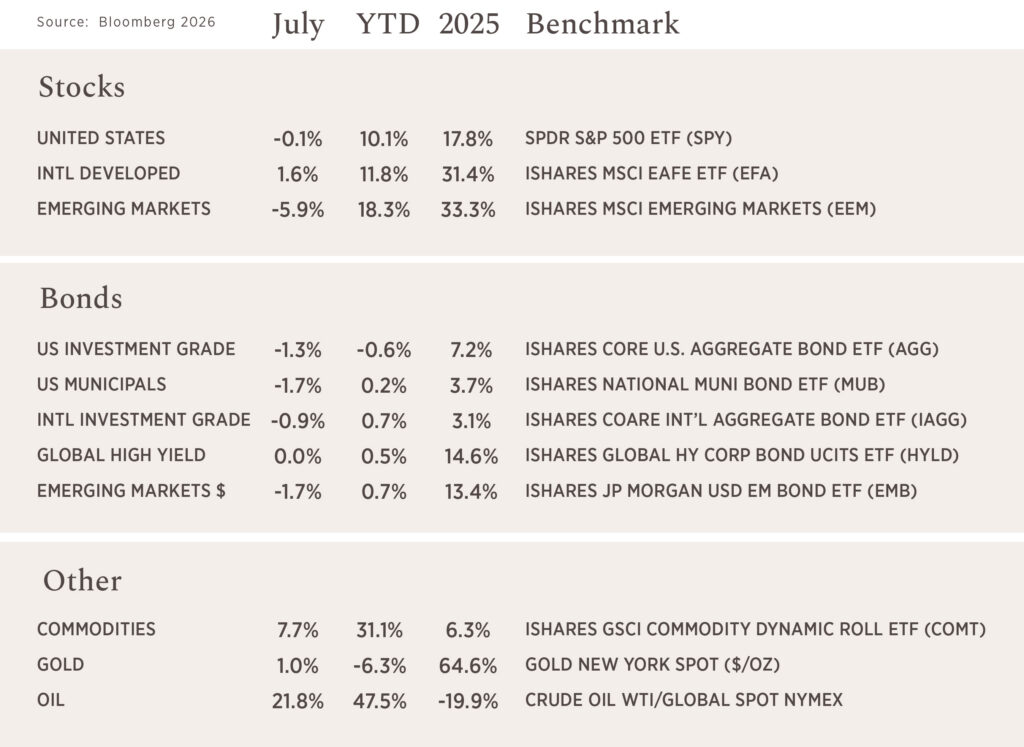
Two years ago, as American voters were preparing to head to the polls to elect the next president of the United States, we wrote about market returns throughout the presidential cycle. Fast forward to today, year two of the presidential cycle, and the public is soon to be inundated with a new round of political ads centered on the November midterm elections.
Historically speaking, year two of a presidential cycle has tended to be the weakest period of a president’s four-year term in office, yet returns have been positive on average. Part of the speculation on the seasonality of this is attributed to the uncertainty surrounding the midterms and whether the balance of power may shift in one direction or the other. Markets appreciate clarity, and as election results become final, businesses feel they have cleared the uncertainty hurdle. We found our chart this month to be an interesting tell on how the U.S. equity market has fared in both the lead-up to and exit from the election date.
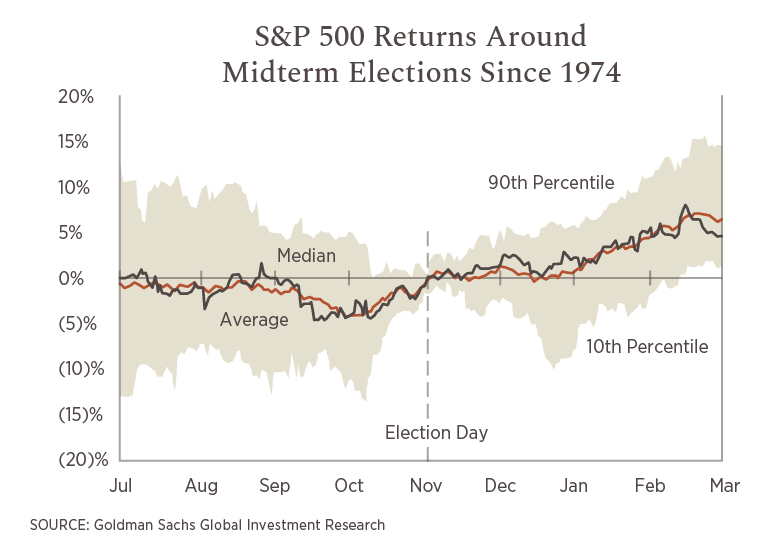
As midterm elections are only every four years, we’re not exactly dealing with a robust sample size. This data looks at 13 midterm election years since 1974, and as the chart illustrates, the S&P 500, on average or median, tends to move sideways leading into election day. Once the election is over, markets have historically found their stride again with returns improving through year-end and into the early months of year three of the presidential cycle.
We are not here to make a call on whether history will repeat itself, but knowing what has happened during seasonal periods in the past may help frame expectations in the short period ahead. We are also not suggesting that election outcomes drive market results. Over time, market returns are influenced more by a growing economy, growing earnings and the prevailing interest rate environment. So, as mailers, phone calls, and radio and television ads get ramped up this election season, adding noise to an already noisy world, stick to the plan you have made. When uncertainty rises, a thoughtful plan can provide clarity and help keep the focus on what matters most.

Consumer financial fraud has risen sharply in recent years, with losses reaching billions and continuing to grow year over year as part of a sustained multi-year trend.1 Knowing how to protect your financial information is essential to safeguarding your identity, privacy, and financial well-being. These seven practical tips will help you stay ahead of evolving scams and reduce your risk.
01 | Stay educated on recent trends in fraud tactics and scams.
- Follow reputable news sources that report on fraud and cybersecurity issues. These sources can provide valuable insights into emerging scams and trends.
- Subscribe to newsletters or blogs from organizations that specialize in fraud prevention, such as government agencies, financial institutions, or cybersecurity companies. These often provide updates, tips, and best practices for recognizing fraud.
- Before taking action, thoroughly research any requests or offers you receive. Evaluate their legitimacy, consider whether they align with your expectations, and verify the credibility of the source. Be skeptical of unsolicited communications and requests for personal information.
02 | Keep your checkbooks, credit cards, bank statements, and IDs in a secure place.
These items contain sensitive information that, if obtained by unauthorized individuals, could lead to fraud and financial harm. To protect yourself, consider the following:
- Be mindful of your surroundings when handling sensitive information in public. Ensure others cannot easily see your account numbers, PINs, or passwords. Shield your information when making transactions or accessing accounts in crowded or unfamiliar environments.
- Securely dispose of documents containing personal information. Use a shredder to destroy outdated identification cards, old debit cards, bank statements, or other unnecessary paperwork.
- Keep your account numbers, credit card numbers, and ID information private. Avoid sharing this information whenever possible.
03 | Regularly review your financial information for suspicious activity or any unauthorized charges.
- Set up transaction alerts or notifications from your financial institutions to receive real-time updates on account activity.
- Review each transaction carefully to ensure you recognize and have authorized it.
- Monitor your credit reports by obtaining free annual reports from credit bureaus or using credit monitoring services, and report any unusual activity.
- Use online banking on your desktop or mobile device to check your accounts frequently.
04 | Be cautious of unsolicited offers, and skeptical of requests for money or personal information.
Trust your instincts. If something does not feel right about a phone call, email, or advertisement, it may not be legitimate. Confirm who you are sending money to, ensure the transaction makes sense, and verify the reason for the request.
05 | Keep your computer’s security software up to date, and use a secure Wi-Fi network.
Keeping your computer up-to-date will help protect you against malware, enhance online safety, mitigate remote attacks and increase vulnerability patching (updates that address security vulnerabilities). To do this, we suggest you:
- Enable automatic updates for your operating system and security software, or regularly check for updates manually.
- Install updates for all software applications regularly.
- Avoid using public Wi-Fi networks for sensitive activities such as banking online or accessing personal accounts.
- Consider using a virtual private network (VPN) for an added layer of security when accessing the internet.
06 | Use strong passwords and multi-factor authentication.
- Create long, complex passwords using a combination of numbers, symbols, and letters.
- Use unique passwords for each account and update them regularly.
07 | Be cautious of targeted telephone calls.
- Avoid sharing banking or personal information over the phone, and do not feel pressured to act immediately.
- Be wary of the question, “Can you hear me?” which may be used to record a “yes” response for fraudulent purposes.
- Remember that law enforcement agencies and the IRS typically do not initiate contact by phone.
By following these recommendations, you can strengthen your awareness of fraud tactics and better protect yourself. Staying informed and using available resources can help you recognize and respond to potential threats.
If you ever receive a message that appears suspicious or references your financial accounts, please contact us. We are always here to help you verify and stay protected.
1. Consumer Sentinel Network reports. (n.d.). Federal Trade Commission. Retrieved April 7, 2026, from https://www.ftc.gov/enforcement/consumer-sentinel-network/reports